Industrial Food Drying: Methods, Applications and Modern Drying Technologies
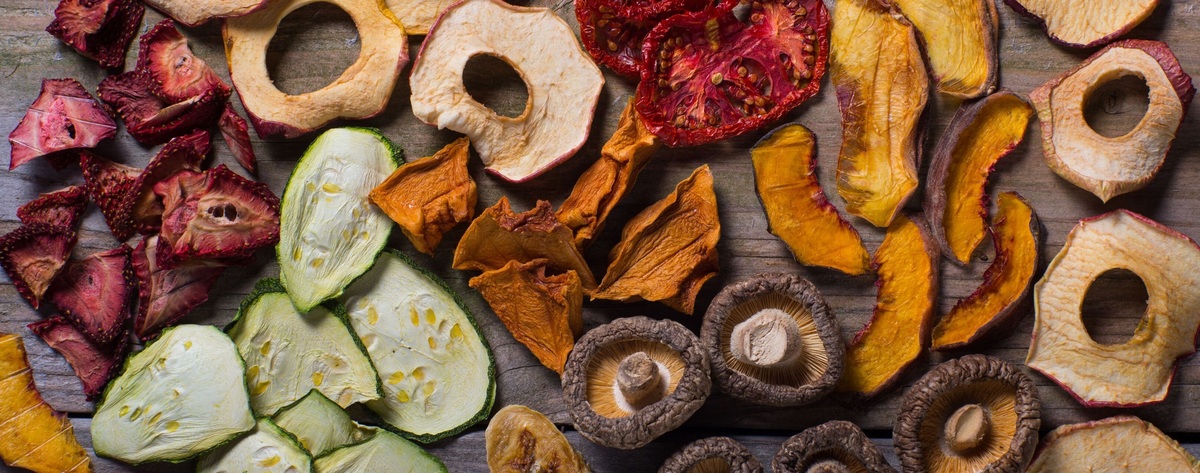
In industrial food production, drying is used to control the moisture content of raw materials and finished products to meet specific requirements for storage, further processing and final use. The process is applied to a wide range of materials, including fruit, vegetables, mushrooms, herbs, spices, coffee, grains and seeds.
The drying conditions must be adapted to each product. Temperature, air humidity, circulation speed, product size and initial moisture content all influence how quickly water is removed and how the dried material behaves. These parameters also affect the final texture, colour, aroma and other quality characteristics.
The equipment used depends largely on the physical form of the material and the required production process. Tray-based drying chambers are suitable for products processed in batches under controlled conditions. The hybrid drying chamber combines forced hot-air convection with an integrated heat-pump condensation system, which removes moisture from the circulating air and recovers heat within the drying process. Rotary drum dryers are designed for continuous processing of loose and bulk materials, using hot-air circulation and the movement of the rotating drum to expose the product to heat.
Why is food dried?
Fresh food products naturally contain varying amounts of water. In many cases, this moisture makes them highly perishable because microorganisms need available water to grow, while enzymes and chemical reactions can also contribute to deterioration.
Drying reduces the amount of available water in a product, making conditions less favorable for microbial growth and slowing many processes associated with spoilage. When combined with suitable packaging and storage conditions, this can significantly extend the product's usable life.
Industrial drying is also used for purposes beyond preservation. Removing moisture can:
- Reduce the weight and volume of products, making storage and transportation easier.
- Produce ingredients with a specific texture, such as crispy fruit chips or dried vegetable pieces.
- Prepare raw materials for grinding, milling or powder production.
- Concentrate flavour and aroma by removing water.
- Improve the handling and storage properties of herbs, spices, grains and other ingredients.
- Prepare intermediate products for use in soups, sauces, seasonings, snack foods and ready meals.
The required degree of drying depends on the intended application. A soft dried fruit product, a crispy vegetable chip and a dry ingredient intended for milling all require different processing conditions.
How does industrial food drying work?
Food drying involves two main processes: transferring heat to the product and removing the moisture that evaporates from it.
Heat supplies the energy required for water to change from liquid into vapour. At the same time, moisture must move from the interior of the product towards its surface, where it can evaporate and be carried away or collected by the drying system.
The exact mechanism depends on the drying technology. In conventional hot-air dryers, heated air transfers energy to the product and carries away moisture. In heat-pump condensation dryers, moisture is removed from circulating air by cooling it until water vapour condenses. Other systems use infrared radiation drying, vacuum drying or combinations of different methods.
The main stages of a professional drying process
1. Preparation of raw materials
Products are prepared according to their characteristics and the desired final result. Fruits and vegetables may be washed, peeled, sliced, diced or cut into smaller pieces. Herbs and leaves may require sorting and removal of unwanted material, while grains, seeds and other bulk products may need cleaning before drying.
For products with enzymes that cause undesirable colour or flavour changes, a suitable pretreatment such as blanching may be used. The need for pretreatment depends on the product and the intended drying conditions.
2. Loading and product distribution
The prepared material is loaded into the drying equipment. In batch drying cabinets, products are generally distributed across trays or shelves. In rotary drum dryers, loose materials are introduced through a feeding hopper.
Uniform product distribution is important. Overloaded trays, uneven layers or inconsistent product sizes can restrict airflow and cause differences in drying rates.
3. Heating and moisture evaporation
Heat is transferred to the product, increasing the temperature of its moisture and supporting evaporation. The product's internal moisture gradually moves towards the surface.
The rate of moisture removal depends on the temperature, humidity and movement of the drying air, as well as the product's thickness, structure and initial moisture content.
4. Moisture removal
The moisture released during drying must be removed from the drying environment. Depending on the equipment, this can happen through air exchange, dehumidification, condensation or vacuum extraction.
If humid air is not removed effectively, the drying process becomes less efficient because the air has a reduced capacity to accept additional moisture.
5. Cooling and packaging
Once the required drying level has been reached, the product may need to cool before packaging. This is particularly important when warm products are packed immediately, as temperature differences can cause condensation inside the packaging.
The dried product should be packed in suitable moisture-resistant packaging and stored under conditions that prevent it from absorbing moisture from the surrounding environment.
What determines the quality and speed of food drying?
Drying performance is influenced by several interacting factors. Increasing the temperature does not always produce a better result or proportionally reduce processing time. Excessive heat can damage sensitive components, while insufficient airflow or poor moisture removal can slow the process.
Some of the most important parameters include:
Drying temperature
Higher temperatures generally increase the rate of heat transfer and evaporation. However, products containing delicate aromas, pigments, vitamins, proteins or sugars may require lower processing temperatures to limit undesirable thermal changes.
Airflow and circulation
Air must move effectively around the product to transfer heat and remove moisture. Poor air circulation can create areas with different temperatures and humidity levels, resulting in uneven drying.
Relative humidity
The ability of air to absorb additional moisture depends on its humidity. Drying air with a lower relative humidity can generally accept more moisture from the product than air that is already saturated.
Product size and thickness
Smaller pieces and thinner slices generally dry faster because moisture has a shorter distance to travel from the interior to the surface. Consistent cutting and sizing therefore help improve drying uniformity.
Initial moisture content
Products with a high initial water content usually require more moisture to be removed. The composition of the product also matters: sugar, starch, fat, fiber and other components influence how water is retained and how easily it can move through the material.
Final moisture content and water activity
Moisture content describes the total amount of water in a product, while water activity indicates how much of that water is available to support microbial growth and chemical reactions. These are related but different measurements.
A product can have a relatively low moisture content but still require careful evaluation of its water activity, depending on its composition. For this reason, professional drying processes should be developed around the required final product characteristics, rather than relying on drying time alone.
Different types of industrial food drying equipment
The most suitable drying technology depends on the physical form of the product, production volume, desired texture and required processing conditions.
Two important approaches are batch drying in enclosed drying chambers and continuous convective drying in rotary drums.
1. Batch drying in heat-pump condensation chambers
Batch drying chambers are designed to process a defined quantity of product at a time. The raw material is distributed across shelves or trays, the drying cycle is started, and the product remains inside the chamber until the required drying level is achieved.
Modern heat-pump condensation dryers offer an energy-efficient way to remove moisture from products using a controlled, recirculating air system.
How heat-pump condensation drying works
During operation, warm, moisture-laden air from the drying chamber passes through the heat-pump system. It is cooled below its dew point, causing water vapour to condense into liquid. The collected condensate is then drained from the machine.
The air, now containing less moisture, is reheated and returned to the drying chamber. This closed-loop process allows heat to be recovered and reused rather than continuously exhausting heated air and replacing it with fresh ambient air.
Because the system recirculates air and recovers heat, it can reduce energy losses associated with conventional dryers that rely on continuous air exchange. It also allows the drying environment to be controlled independently of changing outdoor humidity.
Combining condensation drying with convection
Some industrial drying chambers combine heat-pump condensation technology with additional heating and forced convection.
This hybrid arrangement provides flexibility when processing different types of products. The heat-pump system removes moisture from the circulating air, while forced airflow distributes heat throughout the chamber and across the product.
Depending on the product and the required drying profile, the equipment can operate primarily in condensation mode or use a combined mode with additional heating and stronger air circulation.
For example, delicate herbs, berries and other heat-sensitive materials may benefit from gentle drying conditions. Denser products, such as mushrooms or root vegetables, may require additional airflow and heating to support moisture removal.
Products suitable for batch heat-pump drying
This type of equipment is particularly useful for products that can be distributed across trays or shelves, including:
- Apples, pears, plums and other sliced fruits.
- Strawberries, raspberries, blueberries and other berries.
- Mushrooms and sliced vegetables.
- Herbs, tea leaves and aromatic plants.
- Spices and selected botanical materials.
- Meat and fish products, subject to appropriate process controls.
- Fruit preparations, gels and certain semi-liquid products when suitable containers are used.
The MAK DRYER HYBRID 7–14 combines heat-pump condensation drying with forced hot-air convection. Its standard configuration provides a drying area of approximately 7 m², with the option to expand it to 14 m². The basic version includes 22 shelves, and GN 2/1 containers can be used for suitable liquid or semi-liquid products.
The system is designed for controlled batch processing, with adjustable operating modes for different products and drying requirements.
2. Continuous drying in a convective rotary drum dryer
While drying cabinets are suitable for products arranged on trays, rotary drum dryers are designed for loose, granular and bulk materials that can be moved continuously through a rotating cylinder.
This type of equipment is commonly used when the product can tolerate tumbling and requires continuous processing rather than individual batch loading.
How a rotary drum dryer works
The material enters the machine through a feeding hopper and moves into the rotating drum. Hot air is introduced directly into the drum, transferring heat to the product.
As the drum rotates, the material tumbles and moves along its length. This movement repeatedly exposes different portions of the product to the heated air, supporting heat transfer and moisture evaporation.
The combination of product movement and hot-air circulation allows the material to be dried during its passage through the drum. The dried product is then discharged from the outlet.
The drum's inclination, rotation speed, airflow, heating temperature and product feed rate influence the time the material spends inside the machine and the final drying result.
Which products can be dried in a rotary drum dryer?
Rotary drum dryers are particularly suitable for loose materials that can move freely inside the drum without becoming excessively airborne or sticking to the internal surfaces.
Examples include:
- Coffee beans and selected coffee-processing by-products.
- Grains and cereal materials.
- Seeds and nuts.
- Salt and other suitable granular food ingredients.
- Dried seaweed.
- Fruit and vegetable bagasse.
- Nut and seed processing residues.
- Other granular and bulk food materials.
The equipment can also be used outside the food industry for suitable non-flammable bulk materials, such as sand and certain mineral granules.
The ABM convective rotary drum dryer uses a rotating drum with internal paddles and a hot-air circulation fan. Depending on the configuration, it can be equipped with electric heating or an optional gas-fired heat source. Electric versions are available with 15 kW or 30 kW heating elements, while additional options include drum speed control, temperature regulation and a feeding conveyor for more consistent product dosing.
Gas heating requires particular attention to the characteristics of the material being processed. It is not suitable for flammable or combustible products or completely dry substances, and appropriate fire-safety provisions are necessary.
Batch drying or continuous drum drying: which is more suitable?
These two technologies are designed for different production requirements. The main consideration is not simply the capacity of the machine, but the physical characteristics of the product and how it needs to move through the drying process.
Batch drying chambers are generally suitable when:
- The product is supplied in separate batches.
- Different products require different drying temperatures or processing profiles.
- The raw material is sliced, whole, delicate or arranged on trays.
- Gentle, controlled drying is important.
- The production process benefits from flexible loading and unloading.
Rotary drum dryers are generally suitable when:
- The material is loose, granular or free-flowing.
- The product can tolerate continuous tumbling.
- Continuous feeding and discharge are required.
- A consistent flow of material needs to be processed.
- The material is suitable for direct contact with heated air.
For example, sliced apples, berries and herbs are generally better suited to tray-based drying, where their arrangement and exposure to airflow can be controlled. Coffee beans, grains, seeds and suitable processing residues can be better suited to rotary drum drying, where continuous movement helps expose the material to heated air.
Selecting the right technology from the beginning helps avoid unnecessary processing time, inconsistent results and unsuitable product handling.
Common applications of industrial food drying
Food drying is used across many areas of the food industry, from primary agricultural processing to the production of specialized ingredients.
Fruit and vegetable processing
Apples, pears, plums, bananas, berries, carrots, onions, mushrooms and other fruits and vegetables can be dried into slices, pieces, chips or ingredients for further processing.
Dried fruit is used in snacks, bakery products, breakfast cereals, confectionery and muesli. Dried vegetables are commonly used in soups, sauces, seasoning blends and instant food preparations.
Herbs, spices and botanical ingredients
Herbs and aromatic plants often require controlled drying to preserve their characteristic aroma, colour and appearance. The dried material may be sold whole, cut or ground into powders.
Coffee, grains and seeds
Drying is an important operation in the processing and storage of many bulk agricultural materials. The required moisture level depends on the product and its intended use. Rotary drum dryers can be used for suitable loose materials where continuous movement and hot-air contact are appropriate.
Meat and fish
Drying is used in the production of selected dried meat and fish products. These applications require particular attention to hygiene, temperature control, product formulation and validated food safety procedures. Drying alone should not be treated as a substitute for the necessary microbial safety controls.
Food processing by-products
Materials such as fruit, vegetable, nut and seed bagasse can contain considerable residual moisture. Drying can make these materials easier to store, transport, mill or use in further ingredient production, depending on their composition and intended application.
Why professional drying is different from simple dehydration
A household dehydrator or basic hot-air cabinet may be sufficient for small quantities of food, but industrial production requires greater control over loading, airflow, heating, moisture removal and process repeatability.
The equipment must be matched to the physical properties of the raw material and the desired output. A product that is suitable for tray drying may not behave well inside a rotating drum, while a loose granular material may be difficult to process efficiently on individual shelves.
Professional equipment also allows manufacturers to select appropriate heating sources, adjust process parameters, improve loading and unloading, and integrate drying into a wider production line.
Energy efficiency is another important consideration. Systems that recover and reuse heat, such as heat-pump condensation dryers, can reduce energy losses compared with processes that continuously exhaust heated air. However, actual consumption depends on the product, initial moisture content, batch size, operating conditions and required final moisture level.
The goal is not simply to remove water as quickly as possible. It is to achieve the required product characteristics with a controlled, repeatable and economically suitable process.
Choosing the right industrial food dryer
Before selecting drying equipment, it is important to understand the product and the intended production process.
The most useful information includes:
- Product type: What raw material needs to be dried?
- Initial moisture content: How much water must be removed?
- Required final result: Should the product remain soft, become crispy, or be dried for grinding and further processing?
- Product form: Will it be processed whole, sliced, chopped, granular, loose or in a semi-liquid form?
- Processing capacity: How much product needs to be dried per batch or per hour?
- Temperature requirements: Is the product sensitive to heat, colour changes or aroma loss?
- Production arrangement: Is batch processing or continuous operation more suitable?
- Energy source: Which heating and energy-recovery options are available at the production facility?
The best equipment configuration can only be determined by considering these factors together. Where necessary, drying trials using the actual raw material can help establish suitable operating parameters and evaluate the finished product.
FoodTechProcess offers industrial drying solutions for different food-processing applications, including hybrid heat-pump drying cabinets and convective rotary drum dryers. Whether you need to dry delicate fruit and herbs in controlled batches or process loose bulk materials continuously, the right equipment depends on your product, capacity requirements and desired result.
Contact FoodTechProcess to discuss your drying application and find a suitable industrial drying solution.