DIFFUSERS
Diffusers for extracting soluble compounds from plant materials
Diffusers are used in food processing to extract soluble components from solid raw materials by bringing them into contact with a suitable liquid. During this process, substances such as flavour and aroma compounds, colour components and other soluble constituents pass from the solid material into the solvent.
The resulting extract can be used directly in further production or undergo additional processing, such as filtration, concentration or separation. Diffusion equipment is particularly relevant when processing herbs, botanicals, fruits and other plant-based materials.
How does the diffusion process work?
Diffusion is based on the transfer of soluble substances from the raw material into a liquid phase. The solid material is placed in the diffuser chamber and brought into contact with a suitable solvent, commonly water or, where the process and equipment permit, an ethanol-based solution.
As the solvent penetrates the material, soluble compounds dissolve and move into the surrounding liquid. The resulting extract is then collected for further processing.
The main stages typically include:
- Loading the raw material: Prepared solid ingredients are placed in the extraction chamber.
- Introducing the solvent: The selected liquid is added or circulated through the material.
- Extraction: Contact between the solid material and solvent allows soluble compounds to transfer into the liquid. Extraction conditions, including temperature, contact time and liquid-to-solid ratio, influence the composition and concentration of the extract.
- Extract collection: The liquid extract is separated from the spent raw material and discharged for subsequent processing.
Depending on the diffuser design, extraction may be carried out under atmospheric pressure or reduced pressure. Temperature control, solvent circulation and the arrangement of the material in the chamber also influence extraction performance.
Factors influencing extraction
The efficiency and characteristics of an extract depend on both the raw material and the operating conditions. Particle size, moisture content, preparation of the material, solvent type and concentration, temperature and contact time all affect how readily the target compounds dissolve and transfer into the liquid.
For heat-sensitive ingredients, controlled extraction conditions can help limit unwanted changes to delicate aroma and flavour compounds. The process must nevertheless be selected according to the properties of the material and the compounds being extracted.
Applications in food processing
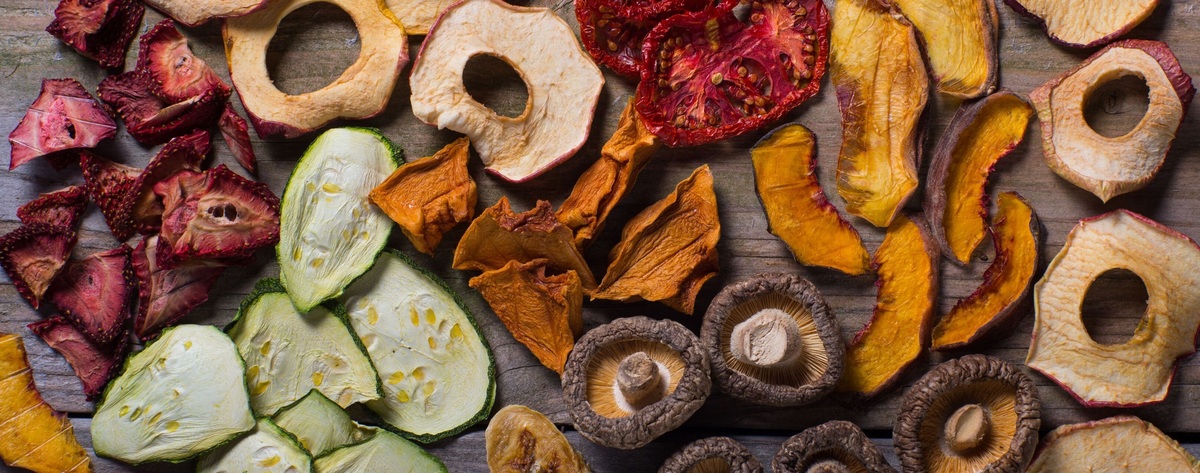
Diffusers can be used to obtain extracts from herbs, spices, botanicals and fruit-based materials. In food and beverage production, these extracts may serve as ingredients for flavouring, aroma development, colouring or the formulation of specialised products.
The same general extraction principle is also used in other industries, including the processing of plant materials for cosmetic and pharmaceutical applications. However, solvent selection, equipment design and hygiene requirements must be appropriate for the intended product and industry.
Selecting a diffuser
When choosing a diffuser, the most important considerations are the type and preparation of the raw material, the compounds to be extracted, the required extract characteristics and the intended production capacity. The solvent, operating temperature, extraction time and method of solvent circulation must also be compatible with the process.
Equipment configuration should account for how the raw material is loaded and discharged, how the extract is collected, and whether the process requires temperature control or operation under reduced pressure.
FoodTechProcess offers equipment for extraction processes involving solid raw materials and liquid solvents. The suitable configuration depends on the material being processed, the extraction method and the required production parameters.
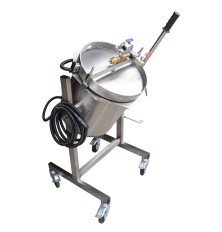
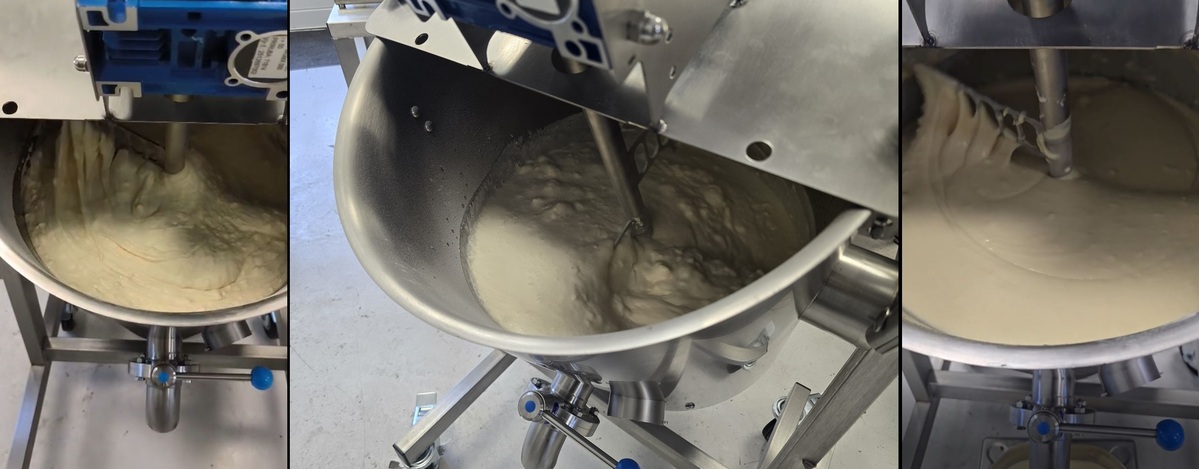
The 50 liter vacuum mixer with a tilting function is designed for gentle mixing of lightweight granules, dry powders, seeds, and similar products under vacuum conditions. Its unique tilting design with multiple locking positions allows continuous gravity-assisted mixing, improving circulation inside the vessel while minimizing manual intervention.
- Vacuum mixing for improved product homogeneity and reduced air content
- Gravity-assisted mixing with multiple tilting positions
- Tilting vessel up to 110° for almost complete product discharge
- Mobile stainless steel frame with locking caster wheels
- Gentle processing of granules, powders, seeds, and similar lightweight products
- Material: Stainless steel
- Engine power, kW: 90 W
- Principle of operation: Batch mode
- Country of origin: Slovakia
- Volume: 50l

A vacuum distillation system is used for controlled separation of liquids based on the evaporation of the liquid and subsequent condensation of its vapors.
- Material: Stainless steel
- Country of origin: Slovakia
- Volume: 5l
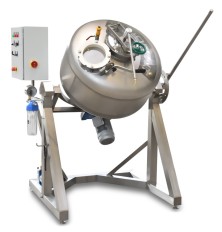
A vacuum diffuser is a device used in the food industry to remove oxygen from a product under vacuum conditions, primarily employed for enhancing the preservation of food by reducing oxidation and extending shelf life.
- Material: Stainless steel
- Principle of operation: Batch mode
- Type of equipment: Individual machine
- Country of origin: Slovakia
- Volume: 200l/ 1000l
- Voltage: 380-400V
- Max vacuum: -0,8 Bar
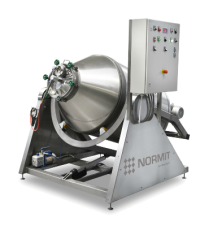
Vacuum coater is ideal for the application of salt and sugar solutions, enzyme, vitamin and anti-oxidants on water or oily basis as it ensures even distribution of small amounts of additives between the total product volume.
The price depends on the production capacity as well as the product being processed.
- Material: Stainless steel
- Principle of operation: Batch mode
- Country of origin: Slovakia
- Max vacuum: -0,8 Bar
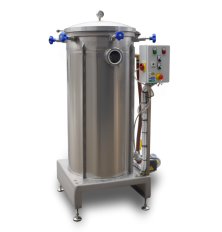
Vacuum diffusion - the process in which the air inside the product is removed by vacuum and the released pores are filled with flavor, vitamins or other ingredients.
- Material: Stainless steel
- Country of origin: Slovakia
- Geometric volume: 350 l/ 700 l