DISTILLERS
Industrial distillers for separating and recovering volatile compounds
Distillers are processing systems used to separate volatile components from liquids or plant materials through controlled evaporation and condensation. The process relies on differences in volatility: selected compounds evaporate when heated, pass into a vapour stream and are then condensed back into liquid form for collection.
In food processing, distillation is used to extract aromatic compounds and essential oils from herbs and other botanical materials, recover or concentrate selected volatile components, and carry out specific beverage-processing operations. The equipment configuration depends on the raw material, the substances being recovered and the required characteristics of the final distillate.
How the distillation process works
The raw material is placed in a processing vessel, where it is heated directly or indirectly, depending on the system design. As the temperature increases, volatile components are released into the vapour phase. The vapour is directed through a condenser, where cooling removes heat and converts it back into liquid.
The collected distillate may contain the desired aromatic or volatile compounds and can be used directly or subjected to further separation and processing.
A typical distillation process includes several stages:
- Raw material preparation and loading: Liquid feed or prepared plant material is introduced into the distillation vessel. The preparation method depends on the material and extraction process.
- Heating and vapour generation: Heat is supplied to release volatile compounds. Temperature and heating intensity influence which components enter the vapour phase and how the process proceeds.
- Vapour transfer: The vapour passes from the processing vessel through the vapour outlet and into the condensation system.
- Condensation: A condenser cools the vapour and converts it into liquid.
- Distillate collection: The condensed liquid is collected in a separate vessel. Where the process produces an oil-and-water mixture, additional separation may be required to recover the individual phases.
Distillation methods and equipment configurations
The method of distillation is selected according to the properties of the raw material and the target compounds.
Steam distillation is widely used to extract essential oils from herbs, flowers and other aromatic plant materials. Steam passes through or comes into contact with the plant material, carrying volatile aromatic compounds into the vapor stream. After condensation, the resulting liquid can contain both essential oil and water, which may be separated using suitable equipment.
Vacuum distillation takes place under reduced pressure. Lowering the pressure reduces the boiling temperature of volatile components, allowing separation at lower temperatures than would be required at atmospheric pressure. This can be useful when processing heat-sensitive materials. One specialized application is wine dealcoholisation, where reduced-pressure processing can help limit thermal exposure and preserve selected aroma compounds.
Depending on the design, a distillation system may include a heated vessel, temperature and pressure controls, vapour piping, a condenser, a collection tank and additional equipment for phase separation. The heating and cooling systems, vessel arrangement and level of process control vary according to the intended application.
Applications in food and beverage processing
Distillation is used in the production of essential oils and aromatic extracts from herbs, spices and other botanical materials. These extracts can be used as ingredients in food and beverage formulations, where they contribute flavour and aroma.
In beverage processing, distillation is applied in the production of distilled alcoholic beverages and in specialized operations such as alcohol reduction or removal. The required system depends on the beverage type, the composition of the feed and the intended properties of the final product.
The same basic principle can be adapted to different raw materials, but the choice of distillation method and operating conditions must reflect the volatility and heat sensitivity of the compounds being recovered.
Selecting suitable distillation equipment
The appropriate distillation system depends on the material being processed and the desired result. Important considerations include the type and quantity of raw material, the target volatile compounds, the required production capacity and whether the process uses steam, direct heating or reduced pressure.
The design of the processing vessel, heating capacity, condenser performance and collection arrangement all influence the operation. For essential oil extraction, the possibility of separating the oil and water phases may also be important. For vacuum processes, pressure control and equipment suitability for reduced-pressure operation must be considered.
FoodTechProcess offers processing equipment for distillation and the recovery of volatile compounds from suitable raw materials. The required configuration should be selected according to the intended application, raw material characteristics, production volume and process parameters.
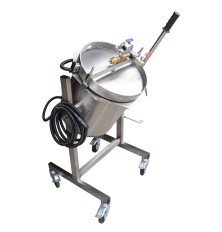
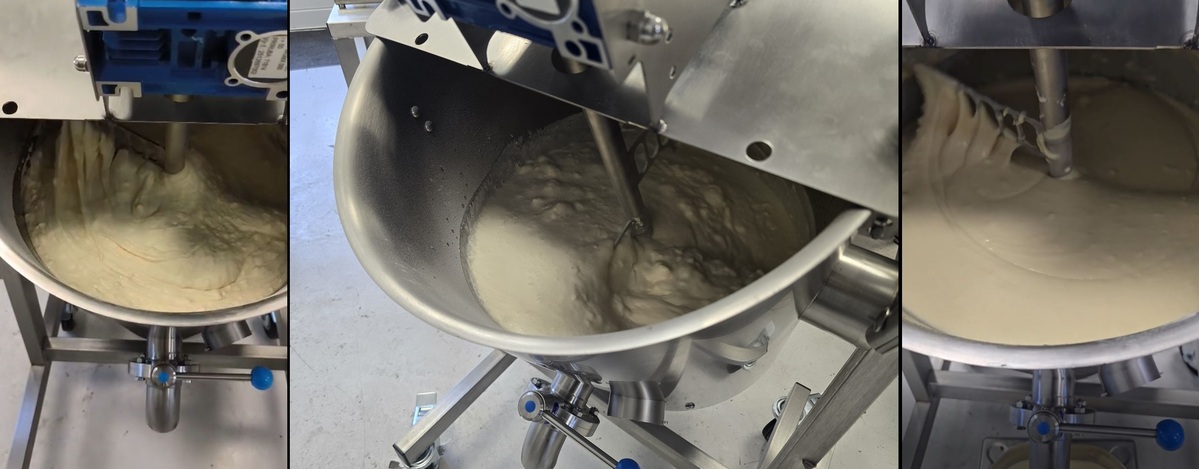
The 50 liter vacuum mixer with a tilting function is designed for gentle mixing of lightweight granules, dry powders, seeds, and similar products under vacuum conditions. Its unique tilting design with multiple locking positions allows continuous gravity-assisted mixing, improving circulation inside the vessel while minimizing manual intervention.
- Vacuum mixing for improved product homogeneity and reduced air content
- Gravity-assisted mixing with multiple tilting positions
- Tilting vessel up to 110° for almost complete product discharge
- Mobile stainless steel frame with locking caster wheels
- Gentle processing of granules, powders, seeds, and similar lightweight products
- Material: Stainless steel
- Engine power, kW: 90 W
- Principle of operation: Batch mode
- Country of origin: Slovakia
- Volume: 50l
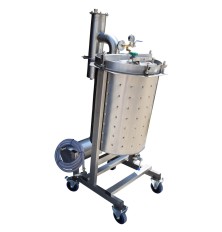
The price is set for the basic version of the vacuum evaporation unit with basic controls (mixer motor switch) and without additional options. The control unit is customized based on individual customer requirements. The pump is also selected separately depending on the product.
A compact vacuum evaporation unit that allows you to concentrate solutions, mixtures, and various products by evaporating the solvent. A modular version based on the basic version of the 110/100 vacuum reactor.
- Gravity mixing - 25% more efficient
- Reinforced agitator design with no blind spots
- Bottom ball valve with no dead zones
- Condensation and secondary vapor removal system
- Easy to disassemble mixing device
- Large heat exchange area
- Ability to measure and monitor condensate volume (optional)
- Material: Stainless steel
- Engine power, kW: 0,25
- Principle of operation: Continuous mode
- Country of origin: Slovakia
- Volume: 100l
- Voltage: 220-230V
- Max vacuum: -0,8 Bar
- Working volume: 50-80l
- Condensing capacity, l/h: 45-55
- Steam consumption, kg/h: up to 150
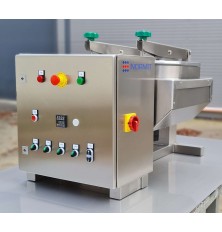
The price is indicated with a semi-automatic control panel
The vacuum cooking kettle is designed for use in public catering establishments (restaurants, hotels, catering companies) and small manufacturing businesses. This equipment enables boiling, blanching, frying, evaporation, pasteurization, mixing or stirring.
- A unique multifunctional device
- Possibility to cook/fry under atmospheric or vacuum conditions
- Laboratory version of a Vacuum Fryer
- Built-in condensation and secondary steam removal system
- Intense electric heating
- Sectional basket with a lid
- Built-in system for separating and removing excess liquid from the product
- Heating: Electric
- Material: Stainless steel
- Heating power, kW: 5
- Volume: 20l
- Oil volume: 8l
- Voltage: 380-400V
- Max vacuum: -0,8 Bar
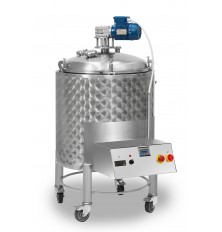
Essential oil distiller with a volume of 130l. It is used for distilling essential oils from different types of plants.
- Material: Stainless steel
- Engine power, kW: 0,55
- Heating power, kW: 9/
- Volume: 130l
- Voltage: 380-400V