CENTRIFUGES
An industrial centrifuge in the food industry is a device used to separate liquid and solid components of heterogeneous mixtures through high-speed rotation. During this process, the product inside the working container is exposed to centrifugal force, which facilitates the separation of its individual components according to their density.
Centrifugal systems are widely used for separating heterogeneous mixtures and can provide an efficient alternative to conventional filtration in suitable applications. More complex separation systems may also include membrane modules, decanters and other technologies.
Industrial centrifuges can be configured as stand-alone units or integrated into more complex food-processing equipment, such as vacuum fryers.
Stand-alone centrifuges are typically used as components of production lines or specialized systems, for example, in the production of soy milk.
The principle of operation is based on separating heterogeneous suspensions, solutions and concentrates into liquid and solid fractions according to differences in density. In this respect, centrifuges can perform separation tasks similar to filtration, but use centrifugal force rather than a filter medium as the primary separation mechanism.
The main technological objectives to consider when selecting a centrifuge include:
- Cleaning
- Extraction
- Filtration
- Drying
When selecting an industrial centrifuge, it is important to consider the properties of the material being processed, including its density, viscosity, particle size and the proportion of solid and liquid components. The required processing capacity, operating mode and method of loading and unloading should also be taken into account. These factors help determine which centrifuge design and configuration will be most suitable for a particular production process.
Cleaning applications are most common in the chemical industry, particularly in environmental processing and waste recycling. One specialized application of centrifuges is the extraction of valuable metals from components of old electronics.
Centrifuges for extraction and filtration are used to obtain extracts from various suspensions and emulsions, for example, in the production of coffee, mushroom and other extracts.
Centrifuges used for filtration-type applications are suitable where a heterogeneous food product must be separated into liquid and solid components, such as in the production of plant-based beverages.
In the food industry, industrial centrifuges are used in multiple processes involving the separation of liquid and solid components. Depending on the product and required result, they can be used to clarify liquid extracts, separate plant-based raw materials from liquids, recover valuable components from suspensions, and remove excess moisture or oil from processed products. They are particularly useful where mechanical separation is required without relying solely on gravity or conventional filtration.
Centrifugal separation can also be integrated into other processing equipment to remove excess water or fat. Examples include salad, herb and vegetable dryers and industrial batch fryers, where centrifugation helps reduce the residual oil content of fried products. This system is used in our vacuum fryers and onion fryers.
Centrifuges can also be classified according to the orientation of their working basket or drum as horizontal or vertical types. Smaller units typically feature top loading, a horizontally positioned drum and bottom unloading, although the exact arrangement depends on the machine design.
In the cosmetics industry, centrifuges are used for the separation and clarification of liquid mixtures, extracts and suspensions. Depending on the process requirements, centrifugal separation can be used to remove suspended solid particles, separate unwanted residues and prepare raw materials for further processing. The appropriate centrifuge design depends on the properties of the product, its viscosity and the desired degree of separation.
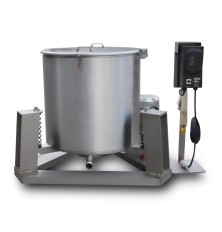
The equipment is designed for centrifuging and separating different types of products and raw materials.
- Material: Stainless steel
- Principle of operation: Batch mode
- Country of origin: Slovakia
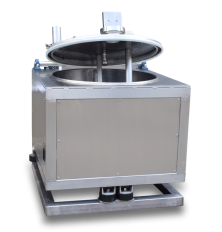
Designed for washing out precious metals and separating them from pre-shredded electrical waste through centrifugal force.
- Material: Stainless steel
- Engine power, kW: 2,2
- Volume: 150l
- Voltage: 380-400V
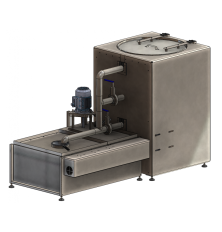
Used for blanching products in water, it is suitable for processing various vegetables, legumes, grains, mushrooms and other products. This versatile machine also functions as a water separator centrifuge which is activated after the blanching processes.
- Productivity: 30l/ 90l
- Material: Stainless steel
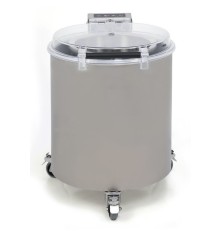
Fast, sleek, quiet, user-friendly, safe, smooth-running commercial salad dryer, designed to efficiently dry up to 6 Kg.
- Engine power, kW: 0,55
- Principle of operation: Batch mode
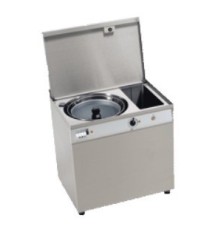
The vegetable spin dryer has been designed for drying leafy vegetables rapidly and efficiently, both raw and boiled, prepared in medium-large sized professional kitchens and in food industries.
- Material: Stainless steel
- Operation mode: Automatic
- Principle of operation: Batch mode
- Voltage: 220-230V
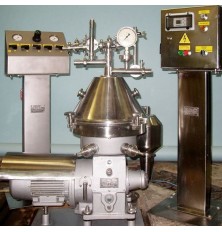
The semi-closed separator for purification, normalization and separation of whole milk into cream and skim milk.
- Engine power, kW: 2,2
- Principle of operation: Continuous mode
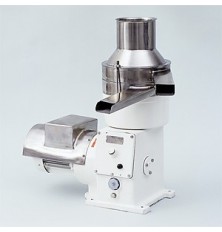
An open-type cream separator with a capacity of 1,000 l/h is designed for continuous separation of whole milk into cream and skim milk. The separator allows the purification of milk from impurities and milk mucus.
- Productivity: 1000 l
- Engine power, kW: 0,55
- Principle of operation: Continuous mode
- Weight: 71
- Voltage: 380-400V
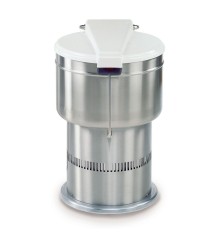
For caterers it is very important to dry any kind of vegetable within a few seconds, keeping unaltered the natural freshness and without damaging the most delicate leaves. We offer 3 different capacities.
- Material: Stainless steel
- Engine power, kW: 0,37/ 1,1
- Principle of operation: Batch mode
- Country of origin: EU
- Weight: 56/ 100
- Voltage: 230 V/ 380-400V