CHEESE VATS

Cheese vats for dairy processing and cheese production
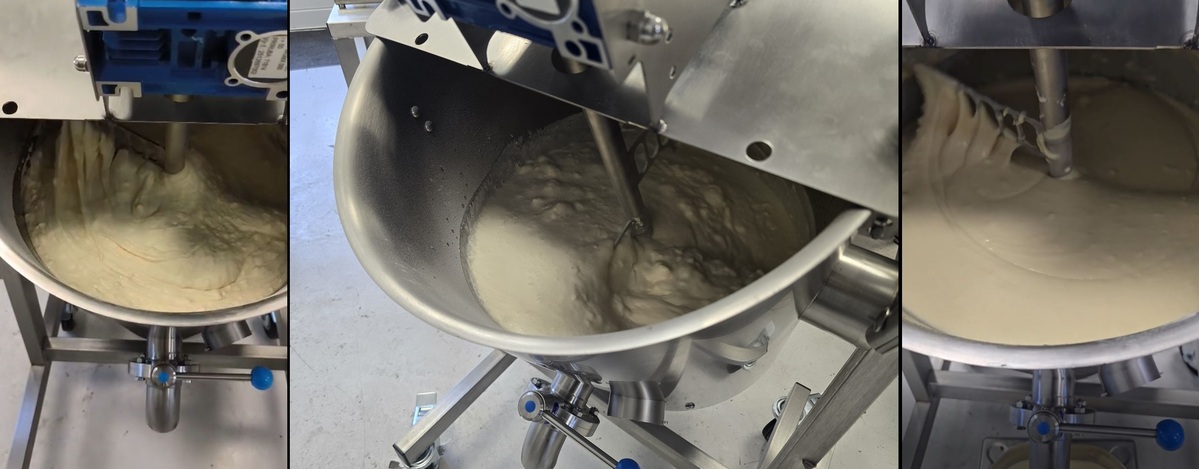
Cheese vats are central equipment in dairy production, where milk is heated, processed and transformed into curd before being separated into cheese grains. The vat provides a controlled environment for the main stages of cheesemaking, including heating, mixing, curd cutting and, depending on the process, further temperature treatment.
The required operations vary according to the type of cheese being produced. Soft, semi-hard and hard cheeses, for example, differ in their curd structure, cutting requirements and processing temperatures. For this reason, cheese vats are available with different capacities, heating arrangements, mixing systems and accessories to suit particular production methods.
From milk heating to curd cutting
During cheesemaking, milk is brought to the required processing temperature and may be pasteurized before starter cultures and other ingredients are added. As the milk coagulates, it forms a gel-like curd, which is then cut into smaller grains using a cheese-cutting harp or similar tool. The size of the grains influences how whey is released and therefore affects the moisture content and final texture of the cheese.
Heating and temperature control are important throughout this process. Depending on the vat design, the product can be heated or cooled as required, while mixing devices maintain movement within the vessel and help distribute heat and ingredients. The arrangement and operation of these components must be suitable for the particular product and processing method.
Some cheese vats are also suitable for other dairy operations, such as milk pasteurization and the preparation of cottage cheese, yogurt, kefir and sour cream. This makes multifunctional equipment useful for smaller dairies and producers who process several types of dairy products in batches.
Cheese vats for different production capacities
FoodTechProcess offers equipment for different scales of dairy production. Compact 50–100 L cheese-making kettles are suitable for home cheesemaking, small dairies and recipe testing. For larger batches, professional cheese vats with working capacities of around 300 L and larger multifunctional dairy processing vessels provide greater processing capacity.
The configuration depends on the model. Heating and cooling systems, agitators and cheese-cutting tools may be included or available in different arrangements. These features determine which processing stages can be carried out in the vat and how the equipment can be incorporated into the dairy production workflow.
Compact 50–100 L cheese-making kettles are designed for smaller batches, while professional 300 L cheese vats offer a larger working volume for regular production.
Equipment configuration and processing requirements
The choice of cheese vat should be based on the intended dairy products and the processing steps that need to be performed. Batch capacity is one consideration, but the type of cheese and its specific production requirements are equally important.
Curd-cutting size, mixing intensity and heating profile all influence the way whey separates from the curd. The heating system must provide suitable temperature control, while the agitator and cutting tools must be appropriate for the consistency and volume of the product. The possibility of cooling the contents is also important for processes that require controlled temperature changes.
For dairies producing several types of cheese or other dairy products, the versatility of the vat can be an important factor. A multifunctional vessel may allow different recipes and processing operations to be carried out using the same equipment, reducing the need for separate processing vessels.
When choosing a cheese vat, consider the required batch volume, types of dairy products, processing temperatures, curd-cutting requirements and available equipment configuration. These details help determine which vat will best fit the intended production process.
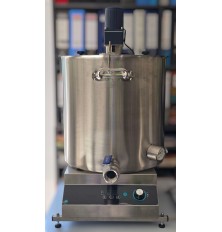
The home cheese making unit is a simple and compact solution for producing homemade cheeses right in your kitchen or for small-scale food production, it can also be used as a laboratory unit for testing new cheese recipes in industrial factories. The unit is designed for processing milk and producing various cheeses and cheese-based products.
- Options to choose electric or gas heating (additional options)
- Special stirrer for automatic mixing, which prevents possible burning of milk
- Visual control during operation thanks to a special safety grid on the upper sectional opening hatch
- Quick-release lid with a stirrer for easy unloading of the product or cleaning of the unit
You can also choose a version of the cooking kettle with a thermometer and an outlet valve, making it suitable for milk pasteurization as well.
- Material: Stainless steel
- Volume: 50l/ 100l/
- Voltage: 220-230V
- Diameter, mm: 400/ 500
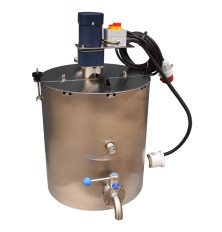
This tabletop electric milk pasteurizer is designed for controlled thermal processing of milk and dairy products in small and medium-sized dairy processing factories. It is equipped with a built-in heating system, an electric mixer, and a hygienic release valve, ensuring uniform, slow pasteurization of milk at approximately 60-65°C for usually around 30 minutes. This mode is ideal for cheesemaking at home or in small-scale production facilities.
- Available in 50 L, 100 L, and 150 L capacities.
- Jacket heating and integrated water heating system
- Continuous mixing with an agitator
- Large-diameter bottom outlet valve for hygienic and quick emptying
- Removable lid with a mixer and protective grill
- Compact tabletop design
- Heating: Electric
- Material: Stainless steel
- Heating power, kW: 3/ 6/ 12/
- Country of origin: Slovakia
- Volume: 50l/ 100l/ 150l
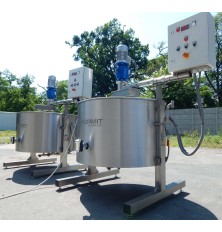
A cheese kettle is a specialized cooking vat used in cheese making processes to heat and curdle milk, allowing the separation of curds and whey. It provides controlled heating and agitation to facilitate the cheese production process. Working volume up to, l: 300 l.
- Material: Stainless steel
- Principle of operation: Batch mode
- Country of origin: Slovakia
- Working volume: 300 l
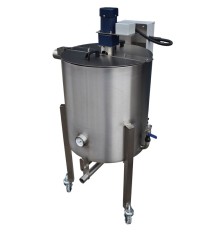
Milk pasteurizer for small and medium-sized enterprises, designed to carry out the pasteurization process of milk and other liquid products.
- Precision and stability of temperature control
- Maintaining the set temperature
- Uniform heating
- Heating: Electric
- Material: Stainless steel
- Heating power, kW: 6
- Principle of operation: Batch mode
- Type of equipment: Individual machine
- Country of origin: Slovakia
- Volume: 100l/ 300l
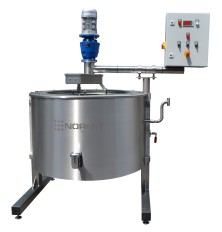
The cheese boiler is used in the dairy industry for the production of cheese grains during the production of natural hard, semi-hard, soft cheeses, and other cheese or curd products. The cheese maker is equipped with a special knife-mixer (lyre) for cutting the cheese curd. Suitable for both small and large scale production. Using this cheese-cooking boiler you can also pasteurize other dairy products, produce yogurt, cottage cheese kefir, fermented baked milk, varenets, sour cream and more.
- Material: Stainless steel
- Operation mode: Automatic
- Principle of operation: Batch mode
- Country of origin: Slovakia
- Working volume: 300 l
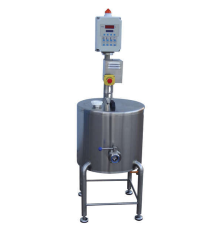
The professional cooking vat is designed for dairy products processing. The machine can be used by farms and small dairy factories.
Please check out the new updated version of our 100 L milk pasteurizer.
- Material: Stainless steel
- Heating power, kW: 24
- Volume: 150l/ 300l/ 500l
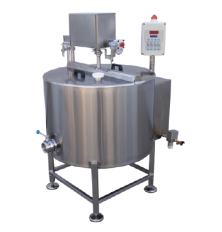
The professional yogurt making machine is designed to produce a wide range of yogurt production, e.g. creamy, liquid drinking, greek, white, organic, fruit yogurts. The machine can be used by farms and small dairy factories.
- Material: Stainless steel
- Principle of operation: Batch mode
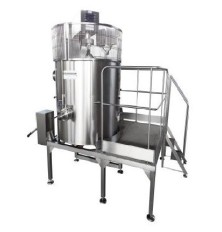
A vat or cooking kettle for milk is a large container or vessel used for heating and processing milk, typically in dairy production, to pasteurize, cook, or produce various dairy products such as cheese or yogurt.
- Material: Stainless steel
- Principle of operation: Batch mode
- Volume: 500l/ 1000l
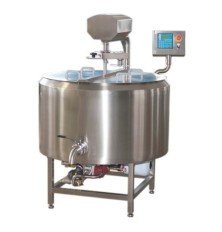
Pasteurizer, cheese boiler is designed for processing milk, yogurt, fruit juice or other liquids.
- Material: Stainless steel
- Heating power, kW: 12/ 18/ 24
- Volume: 200l/ 300l/ 500l
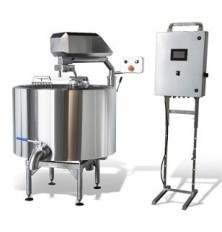
We offer different types of dairy pasteurizers. Tell us if you are producing cheese, milk, yoghurt or ice cream and we will help you pick the right pasteurizer for you.
- Material: Stainless steel
- Principle of operation: Batch mode
- Country of origin: EU
- Volume: 200l/ 300l/ 500 l/ 800 l / 1000l