Equipment design, operating principles, and practical applications
Melting solid and frozen fats is a key operation in many food production processes. Ingredients such as butter, margarine, cocoa butter, and vegetable fats are often supplied in crystallized or frozen form to improve storage stability, yet must be converted into a controlled liquid state before further processing. Specialized fat melters are designed to perform this step efficiently while minimizing product degradation, and energy losses.
Depending on the scale of production and process requirements, fat melting units range from compact batch units to industrial systems for melting large, standardized blocks of fat.
Small-scale fat melters and hobby units
For small-scale production, pilot plants, and artisanal manufacturers, fat melting is typically carried out in compact vessels with a working volume of approximately 50–100 liters. These units are typically designed as tilting kettles with external heating through a jacket, allowing for gradual and controlled melting directly in the vessel without burning the product or overheating.
These melters are well suited for:
- butter
- margarine
- coconut oil
- cocoa butter
- palm oil
- mixed fats
- pork fat
- goose and duck fat
- cream
- frozen juice blocks
- paraffin
- wax
Their simple design and the tilting discharge mechanism make them versatile for small batches, test production, or stand-alone use.
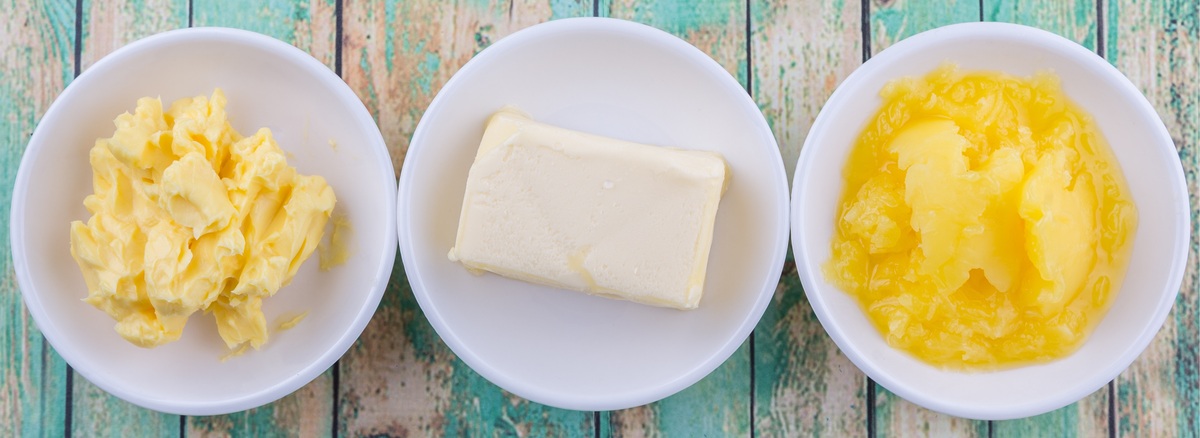
Fat melters can also be used to produce clarified butter (ghee).
Ghee production is a specific application of fat melting, requiring controlled heating and maintenance at a specific temperature. Butter is melted slowly to ensure water evaporation and separation of milk solids without overheating the fat phase. Specialized ghee melters allow this process by providing:
- uniform thermal input
- stable heating control
- simple discharge of clarified fat
These systems are typically used in small to medium-scale production, where repeatability and consistent product quality are critical.
Industrial fat block melters
In industrial settings, fats are often supplied as frozen or solid blocks of varying sizes and weights, commonly around 20 kg per unit. Efficient melting of such blocks requires equipment designed to maximize heat transfer while preventing localized overheating.
A professional fat melter for industrial blocks typically consists of a jacketed tank with a melting grate installed in it. The grate consists of specially shaped tubes through which a heat transfer fluid circulates continuously.
Operating Principle:
- Melting begins at the contact surface of the melting grate as fat blocks are placed on the grid;
- The softened material gradually separates from the block;
- The melted fat flows down into a jacketed working vessel.
This top-down melting principle ensures continuous renewal of the product in contact with the heated surface and reduces the risk of overheating.
Combined thermal and mechanical processing
Many industrial fat melting systems combine thermal melting with mechanical agitation. Various agitators are used under the melting grate to distribute the partially or fully melted material and intensify heat transfer. In some designs, the agitator also assists in product discharge, eliminating the need for additional equipment such as a separate pump.
This combined processing method allows for:
- uniform melting of dense or crystallized products
- preventing the formation of stagnant zones
- controlled discharge of molten fat
These systems are particularly effective when processing highly viscous fats and lump materials of various shapes and sizes.
Heating and process flexibility
Fat melters can be configured for various heat sources depending on the infrastructure of the production facility. Depending on the heat transfer fluid, the systems can operate using:
- hot water or steam supplied to the melting grate and tank jackets
- integrated electric heating in the bottom and/or jacket of the unit
Flexibility in choosing the heat source and heat transfer fluid type allows the melters to be adapted to both small production needs and large industrial production lines.
Hygiene and cleaning considerations
Since fats solidify on cold surfaces, hygienic design is a fundamental consideration when selecting equipment. Fat melters are manufactured with smooth interior surfaces and polished melting grates. Depending on the configuration, cleaning can be performed manually or integrated into an automatic CIP cleaning system.
Easily removable melting grates simplify maintenance and reduce downtime between batches.
Typical applications
Fat melters are used in a wide range of processes, including:
- melting butter and margarine for the bakery and confectionery industries
- processing cocoa butter for chocolate and filling production
- butter blends for ice cream and dairy products
- frozen juices, concentrates, and beverages
- waxes and specialty fats for non-food applications
In many industrial lines, fat melters are also used as a buffer, feeding system, and storage tanks.
Proper melting of fats is critical to maintaining product quality and shelf stability.